Deconstructing ‘Womanhood’


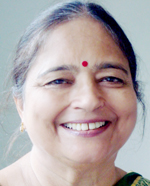
Mrs. Shalini Sinha

Principal, Study Hall School


In Indian mythology ‘Manusmriti’ is considered the word of Brahma, and it is classified as the most authoritative statement on Dharma. I serve you some of Manu’s writings on women:

  • Na ast strinam………..” – 5/158. Women have no divine right to perform any religious ritual, nor make vows or observe a fast. Her only duty is to obey and please her husband and she will for that reason alone be exalted in heaven.
  • “Matra swastra ………..” – 2/215.Wise people should avoid sitting alone with one’s mother, daughter or sister. Since carnal desire is always strong, it can lead to temptation.
  • “Balye pitorvashay…….” – 5/151. Girls are supposed to be in the custody of their father when they are children, women must be under the custody of their husband when married and under the custody of her son as widows. In no circumstances is she allowed to assert herself independently.
  • “Asheela  kamvrto………” – 5/157. Men may be lacking virtue, be sexual perverts, immoral and devoid of any good qualities, and yet women must constantly worship and serve their husbands.


It has left me speechless to say the least! If these are the ‘golden’ words from our much acknowledged text that forms the base of our society, I am not surprised why our society has turned out to be what it is today.

For ages it has been believed that the different characteristics, roles and status accorded to women and men in society are determined by sex, that they are natural and therefore not changeable. Right when a child is born, the dance of gender begins, with the birth of a son being celebrated and that of a girl being a reason to sulk. There are jobs that are women-centric and some that are men-centric, in our religious texts there is in place the way a widow should lead her life, but no such laws for widowers… India is replete with discrimination of the sort.

If anything has to be achieved in order to bring sanity in our society, we need to strike hard at the root of the structure of our society. The way to do it, which will lead to sustained result, is to include in schools and college curriculum components that will teach the children to think beyond their body.

The government needs to do more in order to make women economically independent. For instance today in India a single woman does not have a good chance of getting a loan. Once the Indian woman is economically empowered she will eventually develop the courage to speak up, demand her rights and fight for her rightful place in society i.e. standing tall along with her Man counterpart.

Back to campaign

Promoting Gender Equality through Education in India


Rebecca Winthrop
Director, Center for Universal Education, The Brookings Institute

Protests continue in India, weeks after the horrific gang-rape of a 23-year old university student on December 16th and her subsequent death two weeks later – and rightly so, the incident itself was beyond the pale. A young couple in Delhi boarded a private bus after seeing a movie and instead of discussing character development and plot turns on the way home, the bus doors locked and they were subject to brutal attacks by the other passengers and driver as the bus drove around the city for over two hours. Witnesses driving by did nothing and the victims were eventually dumped out of the bus under an underpass.

But the awful details of this crime are not the main reason for the protests. Instead it is the deep and pervasive gender inequality in India of which this heinous act is a symbol. Girls and women are attacked every day and Indians across the country, particularly young people, are sick of it. Enough is enough they say. There are real reasons why half of all the girls in India don’t want to be girls, and it’s time to change.

If there is any silver lining to this tragedy, it is that the issue of gender equality is on everyone’s lips. Urvashi Sahni, an alumna of our girl’s education Global Scholars Program, is tracking this issue from India and writes that for one of the first times the debate on gender equality is “engaging voices from all sectors of society including students, civil society, academia, political parties, the police, the judiciary and the government.” Now the question remains: what will India do to improve the status of girls and women?

Much of the public discussion focuses on short and long-term solutions such as reforming the law enforcement systems, updating the legal code, supporting the women’s movement, developing new systems of accountability and, of course, having “greater dialogue about India’s patriarchal norms.” All of these things are important but it is the last that is perhaps the most difficult for policymakers and bureaucrats to tackle. Even if it is the most difficult, upending gender norms is perhaps the most fundamental thing needed for long-term sustainable change. Without transforming, in the deepest sense, how girls and women are valued in India, important interventions around such things as legal reforms and police training will end up in the problematic category of “necessary but not sufficient” for developing gender equality in society.

If done right, education can play an important role in redefining gender norms in India. Around the world, there have been numerous excellent examples of education changing people’s way of viewing the world and leading to new forms of behavior, ways of relating with others and ultimately social norms. Indeed, there have been decades of academic research on this topic, so much so that entire subfields of education theory and practice have developed (see for example Jack Mezirow and the field of transformative learning and Paulo Freire and the field of critical pedagogy).

India itself has good examples of education changing social norms towards gender equality. An interesting case of girls’ education programs run in the province of Uttar Pradesh demonstrates that schooling, if done right, can help change gender norms, even in the most marginalized societies. Founded by Urvashi Sahni, the Study Hall Foundation has demonstrated that at the same or lower cost per student as the government schools, their schools can educate girls in a way that enables them to both excel academically, but more importantly emerge as empowered young women. In one of their schools, Prerna, girls outperform their peers both within the province and across India. Ninety percent of Prerna girls complete their education to year 10, compared to below 30 percent nationally, and they do so while outperforming in virtually all subjects (in math and science the Prerna girls perform about 20 percentage points higher on exams than the national average). But most importantly, these girls are changing the gender norms in their communities. They are beginning to fight back when they or their peers are planned to be married off at too early an age. Through street protests and cajoling discussions, they have convinced their parents to keep them in school instead. They initiate community-wide discussions on violence against women. They apply for higher education scholarships and convince their families to let them go once they receive them (an incredibly 88 percent of the girls go on to higher education).

The success of this program is not because the students come from well-to-do families, they don’t (the average family income of students is $108 and 60 percent of their mothers and 40 percent of their fathers have never been to school). It is also not because teachers have higher qualifications or are better paid than government teachers. Rather, according to Mrs. Sahni, it’s because every day the girls’ talk about their worth, value and the issues they face around gender equality. “Gender equality needs to be taught, like math, science, and any other subject” says Sahni, who describes how in Prerna gender equality classes are regularly taught alongside a government curriculum. Then, she is quick to point out, teachers need to be encouraged and supported to fulfill their role as social change agents.

Now this is an idea that the Indian government would do well to listen to. It very well may be a center piece for transforming India’s “patriarchal norms”.

Back to campaign

Critical Dialogues and Empowering Education in the Wake of the Rape Tragedy in India


Dr. Urvashi Sahni
Founder, Study Hall Educational Foundation

The unspeakable horror of the brutal gang rape and murder of a 23-year-old girl in the capital of the world’s largest democracy, India, on December 16th has brought to the forefront the cruel, fatal, highly discriminatory gender norms prevalent in a country that now claims to be one of the worlds rising economic stars. A window has opened for responses that challenge these gender norms through critical dialogues and empowering education.

There is probably no woman in the country regardless of caste, class, religion or region who has not been the target of sexual harassment in some form or other at home, in the work place or on the street. India has one of the lowest sex ratios in the world, one of the highest rates of incestuous sex abuse,  and the worst gender differential of children aged between 1 to 5-years-old such that girls are 75 percent more likely to die than boys. Approximately 1 million girls arekilled in the womb before they are born, 25,000 die due to dowry related deaths and the gory list goes on and on. We are not a nation that values our daughters, or one that knows how to keep them safe.  They are neither safe in the before birth, or at home or in the streets.  And we do nothing about it! The nationwide protests are protesting just this. They are protesting against an apathetic administration, against sexist mindsets of the police, the judiciary and the legislature. They are demanding more just laws, speedier redressal in courts of law and conviction of criminals.  What is noteworthy is the large number of students, men and women who are on the streets, braving lathi charges (administered by stick) and tear gas to make their voice heard. It has now been over 20 days and the protests continue. This continuous, nationwide, mass protest in light of the gang rape- on the scale of the Tahrir square uprising – is not only unexpected, especially in a country like India, it is unprecedented and historic.

While I can only hang my head in shame at this awful crime, I will admit to a sense of exhilaration at the huge response it has generated among the nation’s youth, raising many gender related issues, leading to discussions and debates spanning both the length and I am an educator and the head of a school in Lucknow, the capital of Uttar Pradesh. Last night I went to light a candle in a city park.  Our school is closed for the winter, but many of our students were at the park lighting candles and engaging in critical dialogues.

The media is also making sure the issues do not disappear from the spotlight as is often the case. It is engaging voices from all sectors of society including students, civil society, academia, political parties, the police, the judiciary and the government.  Everywhere people are discussing gender discrimination, gender norms, and the sad status of women and girls in India. Nirbhaya’s (the pseudonym given to the deceased rape victim) brutal rape and murder should not pass in vain.  We hope that this is the turning point.  Everyone is being forced to sit up and take notice of the millions of girls who are being attacked, raped, killed every day all over the country.

Along with the strong measures that the government should take to ensure the safety of our women, as a long term measure we should be working at educating our young people towards more equitable gendered perceptions.  Everyone is clamoring for a change of gendered mindsets and I add my voice to the uproar – we should include gender studies in the post-primary curricula of all schools for both boys and girls. This is one way of ensuring that future generations of men will grow up respecting women and their right to bodily and sexual integrity. If it is important to give our children an understanding of math and science, it is equally important for them to understand equality of gender. Educators have an important role to play in creating a safer, more just world for girls and women.

Also featured on : Global Campaign for EDUCATION, United States Chapter  
Back to campaign

Study Hall Convocation 2011-2012

Photography by : Jyotika Misra

The Annual Fete 2012

The Annual Fete 2012 was held on Saturday 15th December. The air was festive and all around one could see tastefully decorated stalls beautifully adorned with streamers, balloons, charts bearing catchy slogans and smiling faces galore.

A visitor had no chance to ignore even one of these outlets. Be it the mouth watering mutton biryani or the delicious ‘batashas’, name it and it was there. Lo and behold, there were ‘momos’ too.

There were also stalls where one could buy pretty utility items. Fancy planners, artistic paper bags, along with several exquisitely designed propositions enthralled the buyers.

At the games stalls, without hesitation, the enthusiasts were seen doling out coupons of low and high denominations, keenly expecting ‘wins’ of all sorts. Stall holders had very craftily advertised ‘assured prizes’ and towards the end even preferred discounts.

Almost all visitors were seen sporting tattoos of various shapes and sizes on their faces, back and forearms. It is presumed that the profits of this stall must have sky rocketed.

Not to be missed at any cost, the Juke Box and the DJ Zone were the hottest arenas where music and dance were at its best. As Shakespeare rightly stated, ‘If music be the food of love, play on,’ so did staff and students along with guests enjoyed every miniscule moment of it.

It was amazing to witness the ‘eager beavers’ who from the time this fete was inaugurated by Mrs. Shalini Sinha, Principal Study Hall, till the bewitching hour of 4.00 pm loved every moment of it. It was quite funny to see organizers trying to call for a ‘bandh’ at 4 o’ clock because many players were ‘at it’ and very reluctantly withdrew from these ‘gaming zones’ or ‘music zones’. How audible were the sighs and regrets!

Profits ( monetary ) are still to be calculated but the greatest profit we felt we made was add another magnificent treasure in the form of ‘ happy and enriching moments’ to our wonderful school days to be relived in future.

16 Days of Activism on Women Thrive

India is one of the deadliest places for girls.  In India, we do not value our girls. We kill off approximately 1 million girls before they are born each year. Those that make it into the world, have 75% less chances of surviving their first 5 years than boys the same age.  The worst gender differential in child mortality in the world! Then we get rid of them as soon as we can by marrying them off. One third of the worlds child brides come from India.  We all know that girls who get married early are more vulnerabe to domestic violence and maternal mortality. We should stop dignifying child marriage by calling it – “marriage” and call it what it is – Girl slavery! 25000 girls die in dowry related deaths each year. India has one of the highest rates of domestic violence – 40% married women in India are beaten and 56% justify it. Our gender norms are fatal in their discrimination against girls!  If we hope to achieve our goal of gender equality, we need to do some serious thinking about our gender norms and practices. Our school Prerna, which serves girls (age 3 to 18 yrs), from very poor slums in the state of Uttar Pradesh in India has found a way of dealing with gender norms.  We make gender equality a central educational goal, put gender equality at the center of our program and use a critical feminist pedagogy to help our students recognise themselves as equal persons worthy of respect. The students are empowered and learn to resist unfair practices at home. We train our teachers to become mentors to their students and advocates of girls rights. The school engages very closely with the community ,advocating for girls rights. It publicises laws against early marriage and domestic violence, intervenes with the help of community based organisations like Child Protection services and women’s rights organisations, in cases of child marriage and domestic violence. Prerna has incorporated the study of gender power relations in thier official academic curriculum. We believe that gender studies should become a part of the official post primary curriculum for both boys and girls! Gender norms have lethal consequences in India and we should be educating our students early to develop an equitable perception of gender relations.
Our girls have been empowered by their education to not only resist violence in their own lives but have formed a group called Veerangana (meaning ‘Woman of courage’ in Hindi) to engage in community work. They ran a campaign against domestic violence in their own community, conducting discussions in homes, going house to house collecting signatures to a pledge against domestic violence, scripting and performing a street play, publicising the law and taking out a procession with placards and slogans against gender based violence. A short 3 minute film, also made by the girls, can be found on YouTube – Veerangna (from Personal Activism to Social Activism).

Educators have a great responsibility in shaping minds and attitudes. We should not lose these attitudes. While helping students understand the world around them mathematically and scientifically is important,
it is equally if not more important to help them understand the world from the lens of equality.  They must learn to critically examine and reflect upon social structures and unfair gender relations constructed by them.  Why should schools not be the place where they learn to do this? Our school has done this for 8 years now and our girls have learnt to advocate for themselves and for others in their community.

Dr. Urvashi Sahni

Read other blog entries on Women Thrive

Gordon Brown meets Dr.Sahni

Gordon Brown, former Prime Minister of UK, and UN special envoy for education expressed a keen interest in our foundation’s initiatives to prevent child marriage among young girls in Lucknow, Uttar Pradesh.

Dr. Urvashi Sahni met Mr. Brown at Brookings, Washington D.C on 5th December 2012.

Prerna Girls win OneMinutesJr Awards, Amsterdam

There were three categories and the winners of the best video of each category was presented a Tommy award and an HDFlipCam! A youth jury also selected “best of the best” video, and winner also received a Tommy award and HDFlipCam. All nominees have also won a place in a OneMinutes/IDFA Masterclass in Amsterdam. The awards ceremony took place on 24 November 2012 in Amsterdam, The Netherlands. Regretfully Prerna Girls could not make it to the award ceremony but they did receive 2 awards.


The Wall

Kushboo tied for the youth jury award.
[watch on youtube]


Change 

Ms. Priya Dubey won the award for the (Self)Portrait category.
[watch on youtube]


Other nominee from Prerna girls school for One minute of Freedom category was Ms. Neeshu Singh for her movie Its a baby girl [watch]

Microlympics 2012 Sporting Extravaganza

Microlympics, 2012 – 2013 (The Sports Day of Study Hall) was celebrated at the Home Guard Head Quarter Complex ground at Jail Road. Children put up a wonderful and colourful show. Mr. V.S. Chauhan was the Chief Guest for the occasion. He is the ex Principal of Sports College at Lucknow. Known as the Iron man of Asia, he is the Asian gold medalist in Decathalon.

The Lemon Tree (by Std 7), and the Russian dance ( by Std 6) were performed with precision which enthralled the audience. Students of Std. 8 displayed their skills in Yoga and Taekwondo. The track events brought out the sportsman spirit amongst the young athletes.

The highlight of the evening was Fire Flame House lifting the trophy for the Best House followed by Cypress House. Jacaranda House stood third and Silver Oak House fourth. In March Past, Cypress House was adjudged the best House. Jacaranda House won a trophy for being the best house in swimming.

The Mothers’ and Fathers’ race saw enthusiastic participants on the field.  The chief guest appreciated the efforts of the children. The logo for the sports day was designed by Rohina Dass of class XI D and Sakshi Raj of class XII D. The symbols signify the fire burning inside every sports person and the phoenix the spirit of relentless efforts before succeeding.

The Best Athlete award went to the following students :

Group A Girl Praneeta Pandey Class XI D Cypress
Boy Kumar Harsh Class XII D Fire Flame
Group B Girl Manya Gupta class IX B Silver Oak
Boy Shahzar Afzal class IX D Fire Flame
Group C Girl Mariyam Asakina  class VII A Silver Oak
Boy Abhinav Singh Class VII B Fire Flame
 photography by : Ekisha Narain


Dandiya Night 2012 Celebration

As nine days of non-stop fun, dance and festivities is around the corner, the young brigade of Study Hall celebrated Dandiya on 20th November, 2012 with the help of perfect traditional attires, the dolled-up look and dancing skills, preparations for which had started almost a month ago. The dandiya night saw a riot of colours and an eclectic mix of music which will make its  revellers remember the joyous celebrations for years to come.

The event was graced by the presence of Mrs Rehana Ali who has been closely associated with the school  as its former Vice principal and is the founder and Principal of Fairies and Elves school, Mrs Shalini Sinha Principal Study hall, Mrs Meenakshi Bahadur Vice principal Study Hall, Mrs Shalini Chandra Head Mistress Junior school, Mrs Shashi Mehta Principal Prep school ,Mrs  Surabhi Kapoor Head of the department Dosti , Mrs Rakhi Punjwani Principal Prerna school, Mrs Pratima Srivastava Principal Vidyasthali school and Mrs Veena Anand Head Didis food.

Traditional dandia music along with some peppy bollywood dandia numbers to kept the visitors  glued to the floor all through the evening.

The four houses of the school Cypress, Fireflame, Jacaranda and Silveroak participated in an Inter house Dandiya competition. The sight of light-footed young boys and girls swirling in graceful rythmic patterns  delicately balancing themselves evoked awe and admiration in all those who were present.

Silveroak house stood first while Jacaranda and Fireflame house bagged the second and third position respectively.

Various prizes for best attire, best dance, etc were given out.


photography by : Ekisha Narain